Forthcast: AI Demand Forecasting for Shopify
Forthcast helps cut stockouts using AI demand signals. See core features, pricing, and how it stacks against 5 top alternatives →
Hylke Reitsma is co-founder of Forthsuite and a supply chain specialist with 8+ years of hands-on experience at Shell, Verisure, and Stryker. He holds an MSc in Supply Chain Management from the University of Groningen and writes practical guides to help e-commerce teams run leaner, faster supply chains. Selected by Replit as 1 of 20 founders for the inaugural Race to Revenue Cohort #1 (2026) and certified as a Replit Platform Builder.
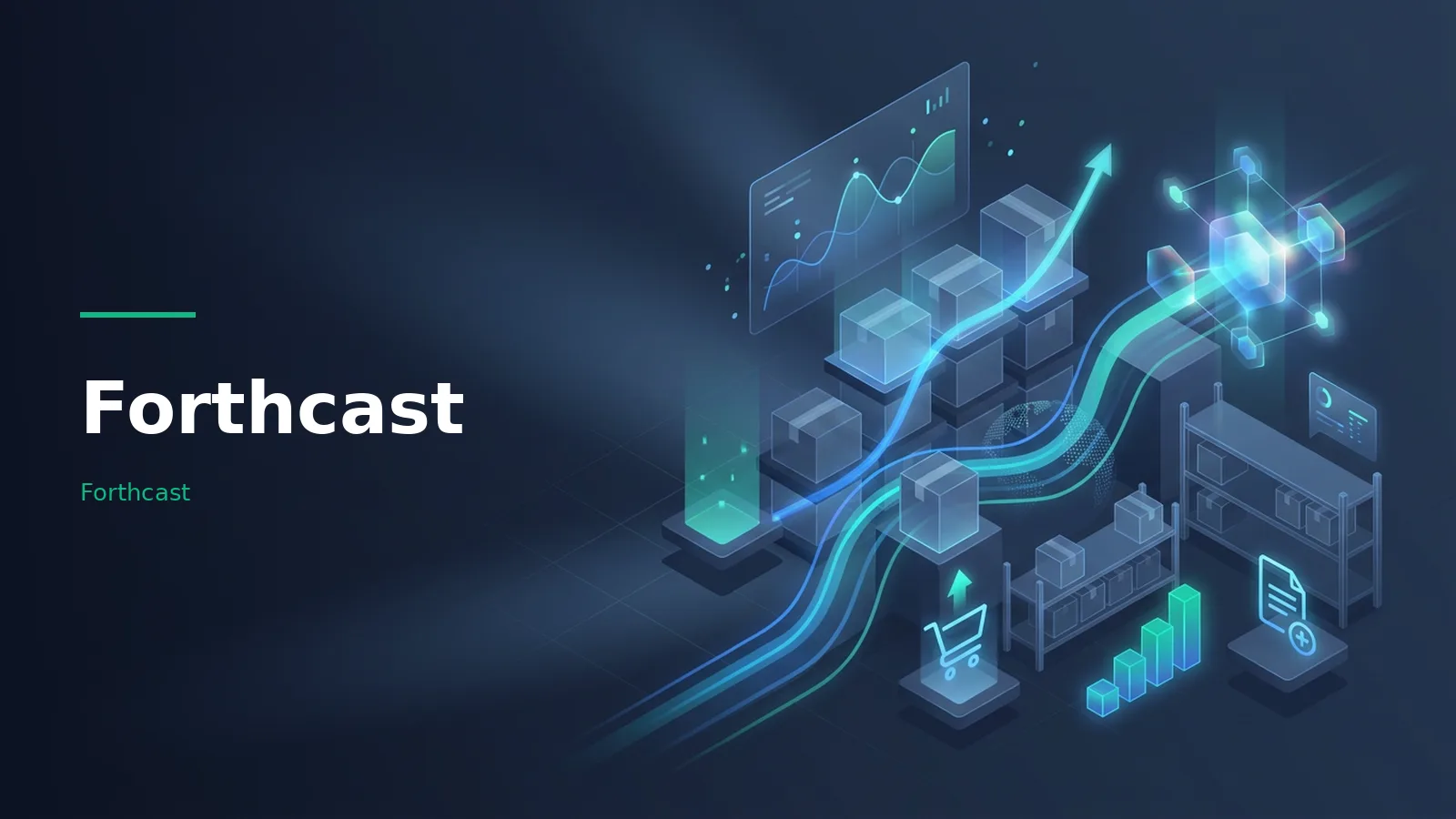
What Is Forthcast? Features, Alternatives & Complete Guide (2026)
TL;DR: Forthcast is a Shopify -focused AI tool designed to simplify inventory forecasting methods and demand planning. Forthcast forecasts demand and reorder points for Shopify stores up to about 12 months ahead, surfaces stockout and lost-sales risk for review, and drafts purchase orders a merchant approves rather than placing them.
Last updated: July 2026
Forthcast is a Shopify-focused AI tool designed to simplify inventory forecasting methods and demand planning. It predicts demand up to twelve months ahead, calculates reorder points, and drafts purchase orders for your approval - all for $19.99/month. With features like stock health analysis, bundle tracking, and new product forecasting, it helps Shopify merchants reduce stockouts and excess inventory. Setup takes under 10 minutes, and it connects directly to your Shopify store, consolidating inventory across all your active Shopify locations into one forecast.
Stocky transition: After August 31, 2026, Stocky can no longer be used to manage inventory. Shopify says read-only export access remains for at least 90 days, suppliers cannot be exported, and Stocky APIs stop on August 31. See our migration guide for Shopify merchants or grab the free interactive checklist.
Key highlights:
- Monthly Cost: $19.99 (no per-SKU fees)
- Setup Time: <10 minutes
- Key Features: Replenishment engine, anomaly detection, bundle decomposition, and multi-location consolidation
- Who It's For: Shopify merchants managing 50–50,000 SKUs
Forthcast is ideal for small to mid-sized businesses aiming to streamline inventory management without enterprise-level costs.
What Is Forthcast?
“there is complexity in terms of how like these POs get placed... There's obviously different lead times by manufacturer, different lead times by SKU, different sales velocity by SKU across Amazon and Shopify which all needs to be taken into consideration... And then obviously supplier MOQs... some of the systems don't always understand that”
“He is doing things mostly manually at the moment and by making assumptions.”
Forthcast is an AI-driven inventory management tool designed specifically for Shopify merchants who are ready to move beyond manual spreadsheets and basic stock tracking. By connecting directly to your Shopify store, Forthcast imports your order history and uses that data to predict demand, calculate reorder points, and generate purchase orders - all without the hassle of manual formulas or pivot tables. Created by supply chain experts with experience at companies like Shell Recharge and Stryker, Forthcast replaces the time-consuming manual processes many growing businesses rely on. Instead of reacting to stockouts after they happen, it continuously analyzes your data and warns you about potential shortages before they occur. Let’s dive into how its core features deliver dependable demand forecasting.
Core Functionality
Forthcast syncs with at least 12 months of Shopify order history to establish a clear picture of your demand patterns. It breaks down sales data at the SKU level into three key signals:
- Baseline demand: The average rate of sales over time.
- Trend: Whether sales are climbing, declining, or steady.
- Seasonality: Recurring patterns, like weekend spikes or holiday surges.
To ensure accurate forecasts, Forthcast excludes periods when products were out of stock. This way, your demand calculations reflect actual customer interest rather than suppressed sales figures caused by stockouts.
The software then calculates optimal safety stock levels and reorder points based on how much demand fluctuates and the lead times you set for each supplier. Forthcast prioritizes your catalog by urgency, flagging items in red for immediate reordering and orange for those nearing their thresholds. You can even create and review draft purchase orders directly from the app. This precise demand modeling lays the groundwork for Forthcast’s advanced forecasting capabilities.
How It Works
Forthcast combines proven statistical forecasting with machine learning that adapts to your store, identifying trends and seasonal patterns in your sales data. This forecasting engine predicts demand up to twelve months in advance.
The platform also tackles common inventory challenges. For example, its bundle decomposition feature ensures accurate tracking of components sold individually and as part of kits, avoiding double-counting. A new product pairing tool links items without sales history to similar SKUs, helping you make informed initial reorder decisions. Plus, anomaly detection highlights unusual sales spikes - like those caused by viral trends or bulk purchases - so your baseline demand remains accurate.
Forthcast consolidates inventory tracking across all active Shopify locations, simplifying your replenishment planning. Daily email alerts notify you when products fall below their reorder points, and a built-in lost sales tracker calculates the revenue impact of stockouts.
sbb-itb-499c055
Key Features of Forthcast
Forthcast is designed to simplify inventory management for Shopify merchants, replacing manual processes with precise, automated recommendations. Its seven key features tackle common inventory challenges, providing data-driven insights to optimize operations.
“He thinks he could use Forthcast as leading, but would want to verify with their current systems and operations.”
Replenishment Engine
This feature calculates reorder points and safety stock by analyzing demand variability and supplier lead times. It flags SKUs based on urgency - red for immediate attention and orange for items nearing their threshold. Additionally, it includes a "Revenue at Risk" metric, giving merchants a clear view of potential sales losses due to stockouts.
Stock Health Analysis
The Stock Health tab organizes inventory into actionable categories like stockouts, imminent stockouts, slow movers, overstocked items, and well-stocked products. Each category comes with financial exposure estimates and tailored recommendations, such as reordering, reducing future orders, or redistributing stock. This data is consolidated across all Shopify locations, ensuring smooth operations across multiple channels.
Forecast Accuracy Metrics
In the Performance tab, merchants can monitor forecast accuracy using MAPE (Mean Absolute Percentage Error) and bias metrics. This approach highlights which SKUs have reliable forecasts and which require adjustments. Forecast quality varies by catalog, so the best way to gauge it is to run Forthcast on your own sales history during the free trial.
Promotional Forecast Adjustments
When planning for sales, product launches, or campaigns, merchants can enhance forecasts directly from the Performance tab. By specifying the SKU, date range, and expected percentage increase, Forthcast adjusts reorder quantities to account for demand surges, ensuring promotional events are seamlessly integrated into inventory planning.
Bundle Decomposition
For merchants selling both individual items and product bundles, Forthcast automatically allocates demand from bundle sales to each individual SKU. This ensures accurate inventory tracking and seamless integration across sales channels.
New Product Forecasting
The New Product Pairing feature helps merchants make informed initial purchasing decisions by leveraging patterns from similar products. This minimizes the uncertainty often associated with launching new items.
Anomaly Detection and Alerts
Forthcast identifies unusual sales patterns, such as viral trends or bulk purchases, to stabilize baseline demand forecasts. Seasonal pre-buy signals are also included in the replenishment table, prompting merchants to stock up in advance of peak demand periods.
Who Is Forthcast For?
Target Users
Forthcast is built for Shopify DTC brands and multi-channel sellers who are ready to move beyond the limitations of spreadsheets. If you're still relying on manual spreadsheets or gut instinct to make inventory decisions, this tool replaces that guesswork with AI-powered recommendations.
The platform caters to merchants managing anywhere from 50 to 50,000 SKUs, all without additional charges - there are no per-SKU fees or hidden costs. It’s especially valuable for merchants selling across multiple Shopify locations, as it consolidates demand data into a single, unified forecast.
Common Use Cases
Forthcast is a go-to solution for merchants grappling with seasonal demand shifts, frequent stockouts, or cash flow tied up in excess inventory. The platform tackles these issues by providing accurate forecasting tools that help businesses stay ahead of seasonal trends and determine the right safety stock levels based on real demand variability and supplier lead times.
For businesses managing inventory across multiple Shopify locations, Forthcast simplifies operations by consolidating stock levels into one dashboard. It even suggests inventory transfers when moving stock between locations is more efficient than placing new orders. This feature is particularly helpful for brands balancing inventory across retail and warehouse locations or operating in multiple regions.
When it comes to launching new products, the New Product Pairing feature shines. It allows merchants to assign demand patterns from similar existing products to new items that lack sales history, removing the uncertainty from initial purchase orders. These practical applications make Forthcast a versatile tool for a variety of inventory challenges.
Company Size Fit
Forthcast is designed with small to mid-sized merchants in mind, particularly those looking to scale their inventory management. To get started, businesses need at least six months of order history, though a full year or more is recommended for the best seasonal forecasting accuracy. This makes it an excellent choice for businesses with established sales patterns but that aren’t ready for the complexity or cost of enterprise-level inventory systems.
At just $19.99 per month, with a 14-day free trial and no card details required up front, Forthcast is positioned as an affordable alternative to enterprise tools that often cost $500 or more per month. Forthcast is built to help cut stockouts and free up cash tied in excess inventory, making it a smart investment for businesses looking to optimize cash flow without adding unnecessary complexity to their processes.
Pricing
| Decision factor | Forthcast | Consider another tool when |
|---|---|---|
| Platform scope | Forecasts demand from Shopify order history. | You must net demand and inventory across non-Shopify marketplaces, wholesale channels or other storefronts. |
| Price | $19.99 per month, flat; 14-day free trial. | Price is secondary to enterprise planning scope or custom implementation requirements. |
| Catalogue size | No per-SKU fee; the page describes use from 50 to 50,000 SKUs. | You need a system that nets stock across warehouses or channels. |
| Core workflow | Forecasts, safety stock, reorder points, draft purchase orders, stock health and alerts. | You need per-lot landed cost or purchase-order optimisation around MOQs and freight class. |
| History needed | At least six months; a year is recommended for stronger seasonal forecasts. | The store has too little sales history to establish a useful baseline. |
Basic Plan Overview
Forthcast keeps things simple with a single pricing tier of $19.99 per month. There are no hidden fees, no per-SKU charges, and no restrictions based on the number of products you manage. Whether you’re handling 50 SKUs or 50,000, the price remains the same. Plus, there’s a 14-day free trial - no card details required up front - giving you plenty of time to sync your data and test out the forecasting engine.
What’s great is that this single plan includes everything - no need for extra add-ons. You get access to features like 12-month SKU-level forecasts, safety stock optimization, purchase order management, bundle tracking, lost sales tracking, anomaly detection, forecast accuracy reporting, daily alerts, new product pairing, Shopify sync via webhooks, and priority support. Even if you decide not to subscribe after the trial, your data is stored for 30 days. And setup? It’s a breeze - typically under 10 minutes with one-click authorization and automatic data syncing.
Compared to enterprise tools that often cost $500 or more per month, Forthcast offers advanced forecasting at a much lower price while outperforming Shopify’s built-in tools. This makes it a smart and budget-friendly choice for Shopify merchants looking to elevate their inventory management.
Best Forthcast Features
Forthcast goes beyond its core functions to offer tools that make inventory management more efficient and actionable.
Replenishment and Stock Health
The Replenishment Engine takes the guesswork out of inventory planning. By automating safety stock and reorder point calculations for every SKU, it factors in demand changes, supplier lead times, and your preferred service levels. Plus, it adjusts demand estimates to account for stockout periods, making replenishment suggestions more reliable.
With Stock Health Analysis, your inventory is categorized into clear, actionable groups: stockouts, imminent stockouts, slow movers, overstocked items, and healthy inventory. This segmentation isn’t just about organizing data - it shows the financial impact of each category, like revenue lost to stockouts or cash tied up in slow-moving goods. Instead of drowning in raw data, you get a prioritized action plan. Merchants using this feature have seen fewer stockouts and reduced excess inventory. It’s all about balancing stock levels while keeping cash flow steady.
Forecasting and Performance Tracking
Forthcast’s forecasting engine provides 12-month SKU-level predictions that account for baseline demand, trends, and seasonality. This method ensures forecasts are precise, even for complex demand patterns.
To keep you informed, the Forecast Accuracy Metrics section tracks MAPE (Mean Absolute Percentage Error) and bias for each SKU. These metrics reveal how well predictions match actual sales, helping you identify and refine less reliable forecasts. The Bundle Decomposition feature complements this by accurately tracking demand for items sold both individually and as part of kits, ensuring no sales data slips through the cracks. Together, these tools keep your forecasting sharp and dependable.
Automation and Alerts
Anomaly Detection is your safeguard against unexpected sales spikes or drops. Unlike static thresholds, it uses forecast-driven insights to distinguish unusual activity from normal seasonal trends, reducing unnecessary alerts.
Daily low-stock alerts and draft purchase orders with suggested quantities help you stay ahead of inventory needs. Forthcast drafts the PO for you when a SKU hits its reorder point, so you can review and place it in a couple of clicks. For new products, the New Product Pairing feature steps in, borrowing demand patterns from similar items to ensure accurate replenishment planning from day one. Setup is quick - just 10 minutes with a single click. These automated tools let you focus on strategy, not constant monitoring.
Where Forthcast Doesn't Fit
Forthcast is deliberately narrow, and that cuts both ways. It works on Shopify and nowhere else, so stock moving through a marketplace, a wholesale channel or another storefront is invisible to the forecast.
It also does not net inventory across warehouses or channels, does not do per-lot landed-cost accounting, and does not optimise purchase orders around minimum order quantities or freight class - it drafts the PO when a SKU hits its reorder point and leaves the buying decision to you. And because the model learns from your sales history, a store with only a few months of Shopify orders will get thinner forecasts than one with a full year behind it.
If you need any of the above, a heavier inventory platform is the honest answer, not Forthcast.
Conclusion
Forthcast takes the hassle out of manual spreadsheets and guesswork by forecasting demand up to twelve months in advance. For Shopify merchants managing anywhere from 50 to 50,000 SKUs, this means fewer stockouts, reduced excess inventory, and more cash flow available for growing the business.
When it comes to daily operations, Forthcast simplifies things by calculating reorder points and drafting purchase orders for your approval. This not only cuts down on the need for constant oversight but also directly addresses stockouts and surplus inventory, making inventory management more efficient. Its stock health analysis turns raw data into actionable insights, showing exactly which products need attention and why. With features like forecast accuracy tracking and anomaly detection, you’re not just solving inventory problems - you’re staying ahead of them before they affect sales.
Forthcast provides advanced inventory tools at a price that works for businesses of all sizes. Check out the Pricing section for details - pricing doesn’t change based on the number of SKUs you manage, and the 14-day free trial doesn’t require a credit card.
"Forthcast is super simple to use and has saved us a lot of headache. Very happy with their tool and the provided support." - Parenting Unlocked
If you’re ready to move from reactive to proactive inventory management, Forthcast offers the precision and automation needed to scale your business while keeping stockouts and overstock issues in check.
For more tips on streamlining your inventory management, including seasonal inventory planning strategies, explore the related blog posts at forthcast.io.
FAQs
What data does Forthcast need to forecast accurately?
Forthcast generates its forecasts from your Shopify sales history. It digs into sales history, seasonal patterns, and demand trends at the SKU level, separating baseline demand, trend, and seasonality. It also excludes out-of-stock periods so your demand signal reflects real customer interest rather than suppressed sales.
This blend of data allows its AI models to anticipate demand shifts effectively. The result? Businesses can minimize inventory costs, avoid stockouts, and benefit from SKU-level forecasts that even automate reorder points.
How do I set supplier lead times and MOQs in Forthcast?
To configure supplier lead times and minimum order quantities (MOQs) in Forthcast, navigate to the inventory or product setup section. Here, you can input the supplier lead time (measured in days) and the MOQ for each SKU. These details are essential for Forthcast to refine demand forecasts and calculate reorder levels, taking into account delivery timelines and minimum purchase requirements. Don’t forget to save your changes to maintain precise inventory planning.
Can Forthcast handle returns, cancellations, and refunds?
Forthcast specializes in demand forecasting, inventory optimization, and preventing stockouts. However, handling returns, cancellations, or refunds does not fall under its primary features.
Forecast demand and avoid stockouts — Forthcast for Shopify.
About the Author

Hylke Reitsma is co-founder of Forthsuite and a supply chain specialist with 8+ years of hands-on experience at Shell, Verisure, and Stryker. He holds an MSc in Supply Chain Management from the University of Groningen and writes practical guides to help e-commerce teams run leaner, faster supply chains. Selected by Replit as 1 of 20 founders for the inaugural Race to Revenue Cohort #1 (2026) and certified as a Replit Platform Builder.
LinkedIn